


Grand Cayman to Guernsey… and back: a Q&A with David Ramsaran
Update
Update
David Ramsaran, an Associate in the Cayman Islands Litigation team recently returned to the Islands following a secondment to Guernsey. Here he discusses the the role of litigations, internships and scholarships, and the cultural differences between international finance centres.
Q: To start, what’s your name and your current role?
A: I’m David Ramsaran, an Associate in the Cayman Islands Litigation team at Mourant. I qualified in Cayman and have focused my practice there, with a recent secondment to Guernsey that broadened my experience across the firm’s disputes work.
Q: What does your day-to-day work involve?
A: My role centres on progressing matters alongside more senior lawyers and often directly with clients. On any given day I will manage timelines against court deadlines, consider tactical and strategic questions and give input as to how best to approach them, prepare first drafts of court documents such as affidavits and skeleton arguments, and keep the moving parts aligned so a case continues to advance. It is the practical heavy lifting that underpins a litigation practice, and it requires strong organisation, clear written work and regular communication with the client team and the court.
Q: What’s a common misconception about litigation work?
A: People sometimes picture a litigator in court day after day. In reality, much of the job happens away from the courtroom. We spend significant time analysing complex legal points, particularly in insolvency and trust disputes, and working through strategy with clients to see, for example, whether a negotiated or alternative solution can achieve the right outcome without a hearing. That blend of legal analysis and practical problem solving is a big part of the appeal for me.
Q: Did you always plan to go into law?
A: Growing up in the Cayman Islands, law is a visible and important industry, so it was always on my list of options. At university I kept that path open and chose studies that could lead to a legal career. The turning point was hands-on exposure through internships, which confirmed that law—and litigation in particular—was a strong fit for my interests and skills.
Q: How did you first get involved with Mourant?
A: I undertook several Mourant internships starting around 2015–2016, when I was 18 years old, rotating through Governance, Corporate and Finance, and then Litigation. That variety let me try different types of work, meet a wide cross-section of colleagues and understand the pace and demands of each area. I was fortunate to be awarded the Chantal Whittaker Memorial Scholarship, which helped fund my legal practice course and led on to my articles of clerkship with the Firm. The scholarship also helped while I was at university studying my law degree. The combination of support, training and exposure to real matters made the transition to qualification much smoother.
Q: What drew you to litigation over, say, corporate and finance?
A: I seriously considered both corporate and finance and litigation during my training. I chose litigation because no two days feel the same and very few problems have an obvious answer. You have to think hard about the law and the facts, but also about the client’s true objective and what will move the dial in practice. That combination of variety, intellectual challenge and client strategy keeps the work fresh.
Q: You spent most of 2025 in Guernsey. Why take that secondment?
A: Secondments are not always associated with litigation, so when our HR team approached me about the opportunity in Guernsey it felt like a rare chance to see a different office and jurisdiction up close. I had studied in the UK and expected life on a Channel Island to feel familiar. The Guernsey team was exceptionally busy and full of a different set of high-performing and incredibly intelligent lawyers from the ones I have worked with since the start of my career. This meant I could add immediate value while learning how another high-performing office operates and from a different set of experienced lawyers. It proved to be a great decision for my development and perspective across the firm.
Q: How did the work in Guernsey compare with Cayman?
A: There were strong similarities in the nature of disputes: insolvency, trusts and a significant stream of regulatory and enforcement matters. That overlap meant many of the concepts felt familiar. The key difference was jurisdictional—practising Guernsey law rather than Cayman law—so I needed to get up to speed on local rules and procedure. The team’s knowledge resources, training and support, including a court officer to assist with filings, helped me get fully operational very quickly while maintaining quality and pace.
Q: And life outside work, what stood out?
A: The community was welcoming and social, with plenty of sport. Pickleball and padel are both popular, which is something I had seen growing in Cayman as well, so they became an easy way to meet people and unwind. The weather, of course, was a shift from Caribbean sunshine to wind and rain, and I cycled everywhere, which made even a commute feel like a small adventure. Those everyday experiences gave me a fuller sense of island life in Guernsey.
Q: What responsibilities did you take on during the secondment?
A: Because the office was so busy, I often worked directly with Partners and led matters day to day, rather than sitting between a Senior Associate and Partner. That step up brought more client contact, more responsibility for drafting and case management, and more client and intermediary exposure as well. It pushed me to make decisions with confidence and to balance precision with momentum, which is invaluable experience for any litigator.
Q: Talk us through the move back.
A: After Guernsey I spent time in the UK ahead of the birth of my first child, took parental leave, and returned to Cayman in January. The team was very supportive about the life change and the transition back. I have come back with broader experience and now play a more significant role across my Cayman matters, drawing on what I learned in Guernsey about leading files and collaborating across offices.
Q: What kinds of work do you enjoy most?
A: I am particularly drawn to complex problems in the insolvency and trust spaces. These matters demand careful legal analysis but also a practical understanding of people and incentives—what the client really wants, what other parties are likely to do next, and how to align process, evidence and advocacy to achieve a clear outcome. That blend of technical complexity and practical strategy is where I feel I add the most value.
Q: How closely does Cayman Litigation work with other Mourant offices?
A: Collaboration is a constant. In Cayman we frequently work with colleagues in Hong Kong such as Michael Popkin, Justine Lau and their litigation team. In Guernsey I coordinated with our BVI office on a Guernsey insolvency that required service of a statutory demand in BVI. The cross-office model means clients benefit from local court expertise with seamless links to related jurisdictions.
Q: Where are most of your clients based?
A: Many clients are in Europe and Asia, particularly China and Hong Kong, reflecting the global nature of Cayman structures. There is also a steady US element, given the number of funds with US connections. I am seeing more from the Middle East as well, which echoed a matter I worked on during my time in Guernsey. That spread keeps the work international and varied.
Q: What’s next for you?
A: I am committed to growing within Mourant and taking on increased responsibility as I progress. Alongside casework I am investing in formal learning, including courses with INSOL for insolvency and STEP for trusts, to deepen my technical foundation and stay current with best practice. The aim is to translate that learning into better outcomes for clients and to contribute more to the team’s development.
Q: What skills are essential for litigation work?
A: At its core, litigation blends clear thinking with disciplined delivery. You need strong legal analysis to work through complex issues and reach a defensible position, especially in areas like insolvency and trusts where there is rarely a simple answer.
Procedural rigour and time management are non-negotiable, and equally, you need practical judgement: understanding what the client really wants, what the other side is likely to do, and how to sequence steps to reach the best outcome, whether that is settlement or a hearing.
Client communication is critical. You have to explain options plainly, give realistic risk assessments, and keep people informed without drowning them in detail. Commercial awareness helps too; many disputes sit within wider fund, trust or corporate contexts, so you need to see the big picture as well as the legal points.
Finally, litigation can be intense. Staying calm under pressure, maintaining high ethical standards, taking feedback, and stepping up to lead parts of a matter when needed all make a real difference.
Continuous learning, through formal courses and on the job, is essential if you want to keep improving and add value to clients and the team.
Contact
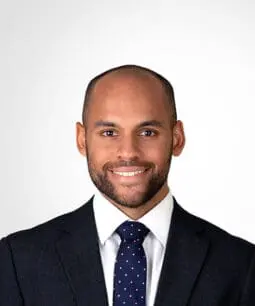
David Ramsaran
This update is only intended to give a summary and general overview of the subject matter. It is not intended to be comprehensive and does not constitute, and should not be taken to be, legal advice. If you would like legal advice or further information on any issue raised by this update, please get in touch with one of your usual contacts. You can find out more about us and access our legal and regulatory notices at mourant.com. © 2026 MOURANT ALL RIGHTS RESERVED

Litigation and Dispute Resolution
 Guide
Guide
 News
News
 News
News
 News
News
 Update
 Update
Sign up
Subscribe to keep up-to-date with the latest news, updates, legal guides and thought leadership articles.
Ready to take the next step? Let’s talk.
Send our team a message and we’ll be back in touch with you.